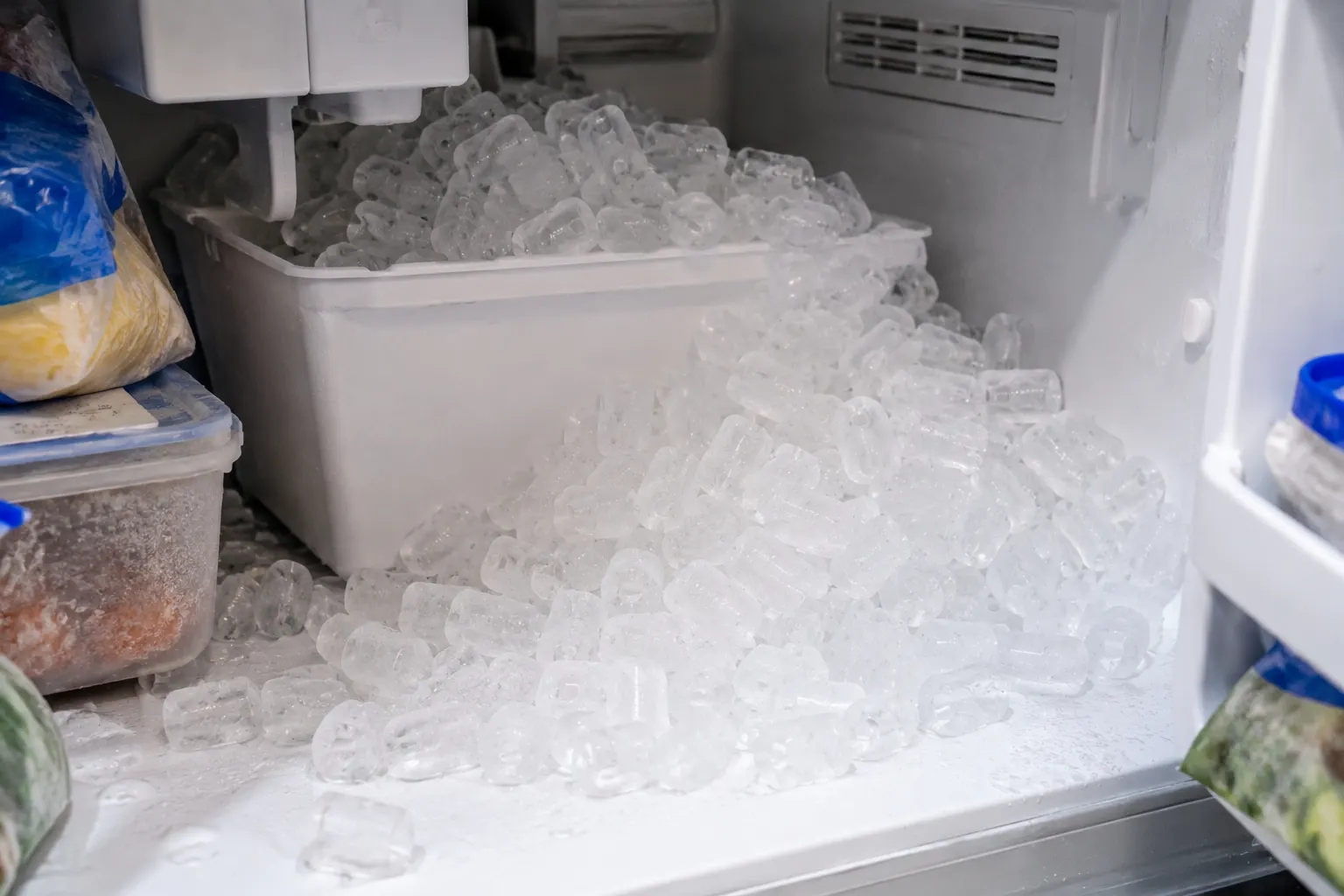

A refrigerator ice maker overflowing is a common refrigerator problem that can lead to leaking water, frozen ice clumps, and messy freezer buildup.
Understanding the most common causes can help homeowners identify issues early and keep their refrigerator running more efficiently.
Refrigerator Ice Maker Overflowing: Common Causes and Helpful Troubleshooting Tips
Below are the most common causes of refrigerator ice maker overflowing problems.
Frozen Fill Tube
The fill tube supplies water to the ice maker mold during each ice cycle. If the tube partially freezes, water may spray unevenly or spill outside the mold instead of filling it correctly.
Common signs of a frozen fill tube include:
- Ice buildup around the back of the ice maker
- Misshapen or connected ice cubes
- Water dripping into the ice bin
- Frost accumulation near the water entry point
If ice buildup keeps returning around the fill tube, professional service may be needed to determine whether a failing water valve, temperature issue, or airflow problem is causing the tube to freeze.
Faulty Water Inlet Valve
The water inlet valve controls the flow of water entering the refrigerator. When the valve starts wearing out, it may not close completely after the fill cycle ends.
Even a small amount of continued dripping can gradually cause overflowing ice trays and frozen buildup inside the freezer compartment.
Symptoms often include:
- Oversized ice cubes
- Water beneath the ice bin
- Ice cubes stuck together
- Dripping sounds after the ice cycle finishes
Because the inlet valve involves both water supply and electrical components, diagnosis should be handled by a qualified technician.
Ice Level Sensor or Shutoff Arm Problems
Ice makers use either a shutoff arm or electronic sensor to detect when the ice bin is full. If the sensor stops responding correctly, the ice maker may continue producing ice beyond capacity.
This can cause:
- Ice overflowing into the freezer compartment
- Ice jams around the dispenser
- Continuous ice production
- Blocked airflow inside the freezer
If the refrigerator continues making ice even when the bin is full, professional service may be necessary to inspect the sensor or control system.
High Water Pressure
Excessive household water pressure can force too much water into the ice maker during each fill cycle. This may overwhelm the ice mold and create overflowing water inside the freezer.
Signs of excessive water pressure may include:
- Hollow or unusually large ice cubes
- Splashing sounds during fill cycles
- Water leaking around the ice maker
- Irregular ice sizes
A technician can test the refrigerator’s water pressure levels and determine whether adjustments are needed.
Worn Ice Maker Assembly
Over time, internal components inside the ice maker assembly can wear down. Timing problems, cracked molds, or failing internal mechanisms may interfere with proper water control.
Older ice maker assemblies may develop:
- Inconsistent ice production
- Overflowing during certain cycles
- Ice sticking inside the tray
- Excess frost around the assembly
Since many modern ice makers use integrated assemblies, professional replacement is often recommended when major internal components begin failing.
Freezer Temperature Problems
Ice makers depend on stable freezer temperatures to operate properly. If temperatures fluctuate too much, the ice maker may not fully freeze cubes before the next fill cycle begins.
Temperature-related issues may cause:
- Slushy ice cubes
- Water around the ice maker
- Frost buildup near vents
- Irregular ice production
If temperature inconsistencies continue, the refrigerator may need professional evaluation to inspect cooling performance and airflow circulation.
Helpful Troubleshooting Tips
When refrigerator ice maker overflowing problems happen, there are a few simple things homeowners can try:
- Remove excess loose ice from the ice bin so it does not block the shutoff arm, sensor area, or freezer airflow
- Make sure food containers are not blocking freezer vents
- Check whether the ice bin is seated correctly and not pushed out of position
- Look for visible frost or ice buildup around the fill tube or back of the ice maker
- Gently clear loose ice around the ice bin area, but avoid forcing or chipping at frozen parts
- Lower the freezer temperature setting slightly if items seem soft or ice cubes look slushy
- Watch whether the overflow happens only during active ice production or continues between cycles
- Listen for dripping water after the ice maker finishes filling
- Note whether ice cubes have suddenly become oversized, hollow, or stuck together
These steps can help reduce airflow restrictions and provide useful clues about what is causing the overflow.
If the problem continues, a professional should inspect the ice maker system to prevent additional leaks, frozen buildup, or component damage.
When Refrigerator Ice Maker Overflowing Problems Need Professional Service
While minor frost buildup or occasional overflowing may seem manageable at first, persistent ice maker overflow usually points to a larger mechanical or electrical issue. Addressing the issue early may help prevent water damage, frozen airflow restrictions, and additional refrigerator component failures.
The Tampa refrigerator repair experts at Appliance Repair Specialists can help diagnose the issue and restore reliable refrigerator performance.